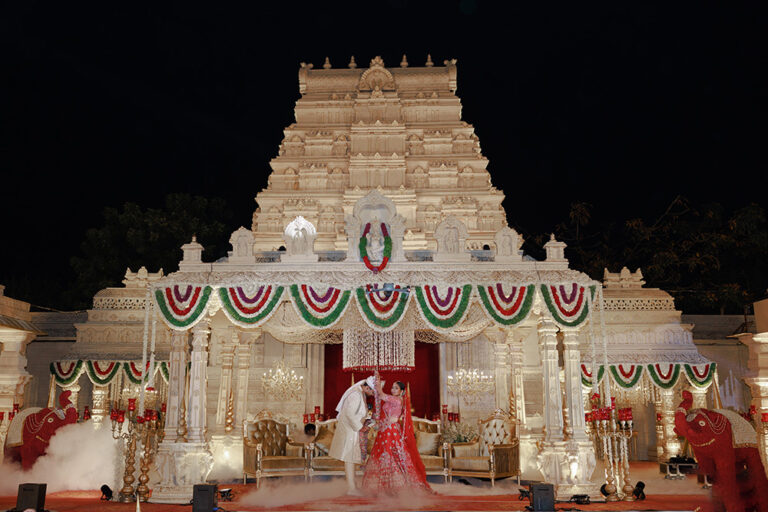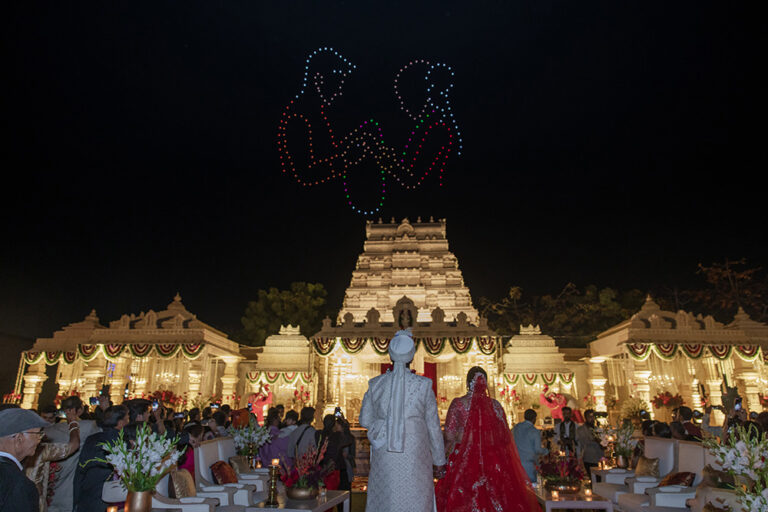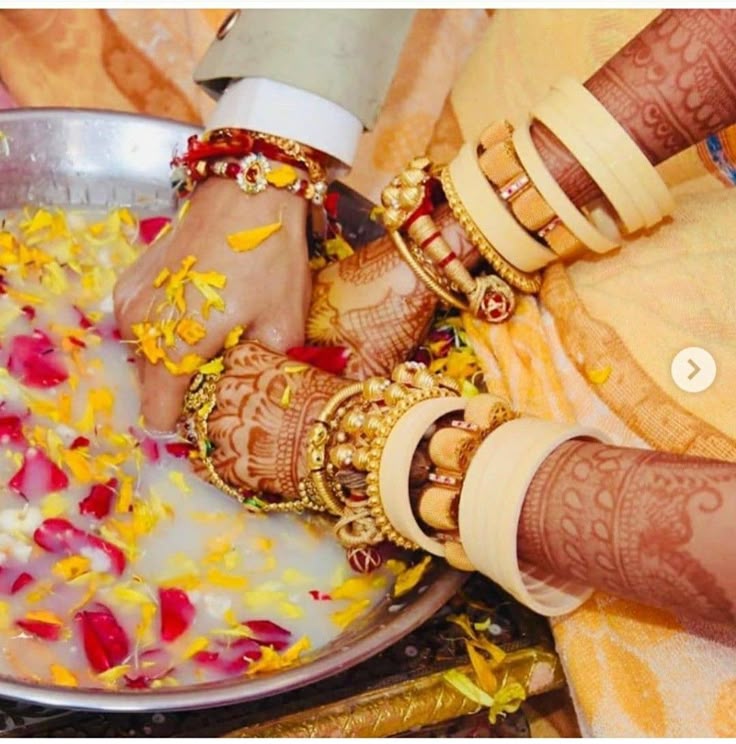
It was during a regal Rajput wedding in Udaipur that I stumbled upon a ritual that made me pause and smile in wonder. As the groom’s baraat left with the usual pomp, I noticed a different kind of celebration happening inside the house.
Two little girls – one in a sherwani and the other in a bright lehenga – were re-enacting the wedding rituals, mimicking the elders, giggling with every step. An aunt leaned in and whispered, “Yeh Jua-Jui Rasam hai.”
The Jua-Jui Rasam is a playful Rajput tradition where the women of the house stay back after the groom leaves, and two young girls symbolically perform the wedding ceremony. It’s joyful, imaginative, and meant to bring good luck to the family.
That one ritual led me down a rabbit hole. I couldn’t stop thinking – how many beautiful customs like this are out there, quietly passed down through generations?
Here are just a few gems I uncovered:
North India: Kalire & Chooda
In Punjabi weddings, brides wear Kalire—golden ornaments tied to their bangles. During a sweet ceremony, the bride shakes them over her bridesmaids’ heads. If one falls, that friend is next in line to get married!
South India: Kashi Yatra
In Tamil weddings, the groom pretends to renounce worldly life and head to Kashi with a walking stick. The bride’s father dramatically stops him, offering his daughter’s hand and a return to domestic life.
Odisha: Kauri Khela
Here, the bride and groom play a game using cowrie shells. It’s not just fun—it’s a moment of ease, laughter, and bonding before the solemnity of rituals resumes.
These traditions are more than rituals—they’re emotion, theatre, and legacy wrapped into celebration.
But while some rituals are steeped in spiritual symbolism, others are… well, wonderfully weird.
Up next: Nose-pulling, fish-releasing, and why tearing the groom’s clothes is good luck.
Stay tuned for Part 2!